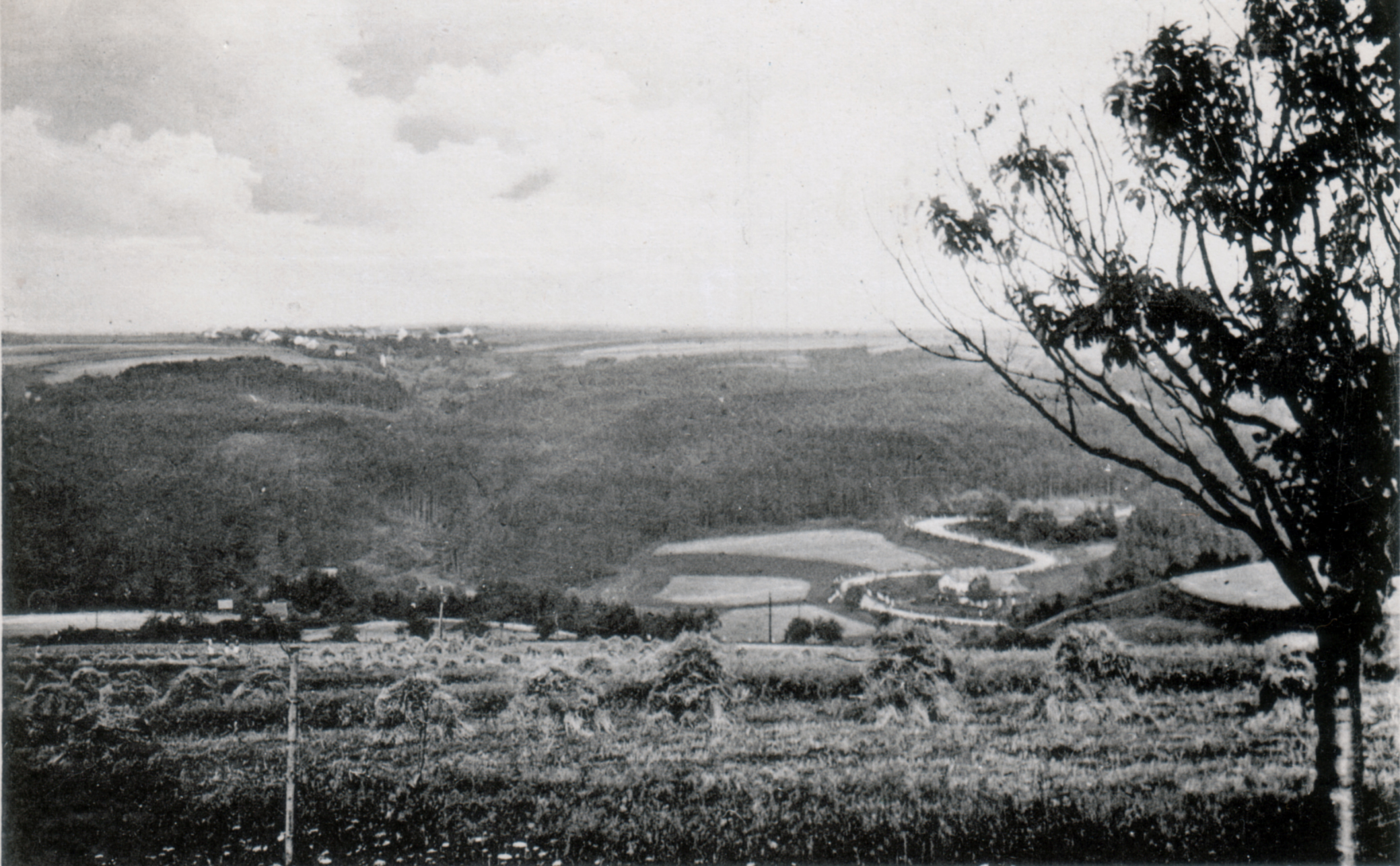
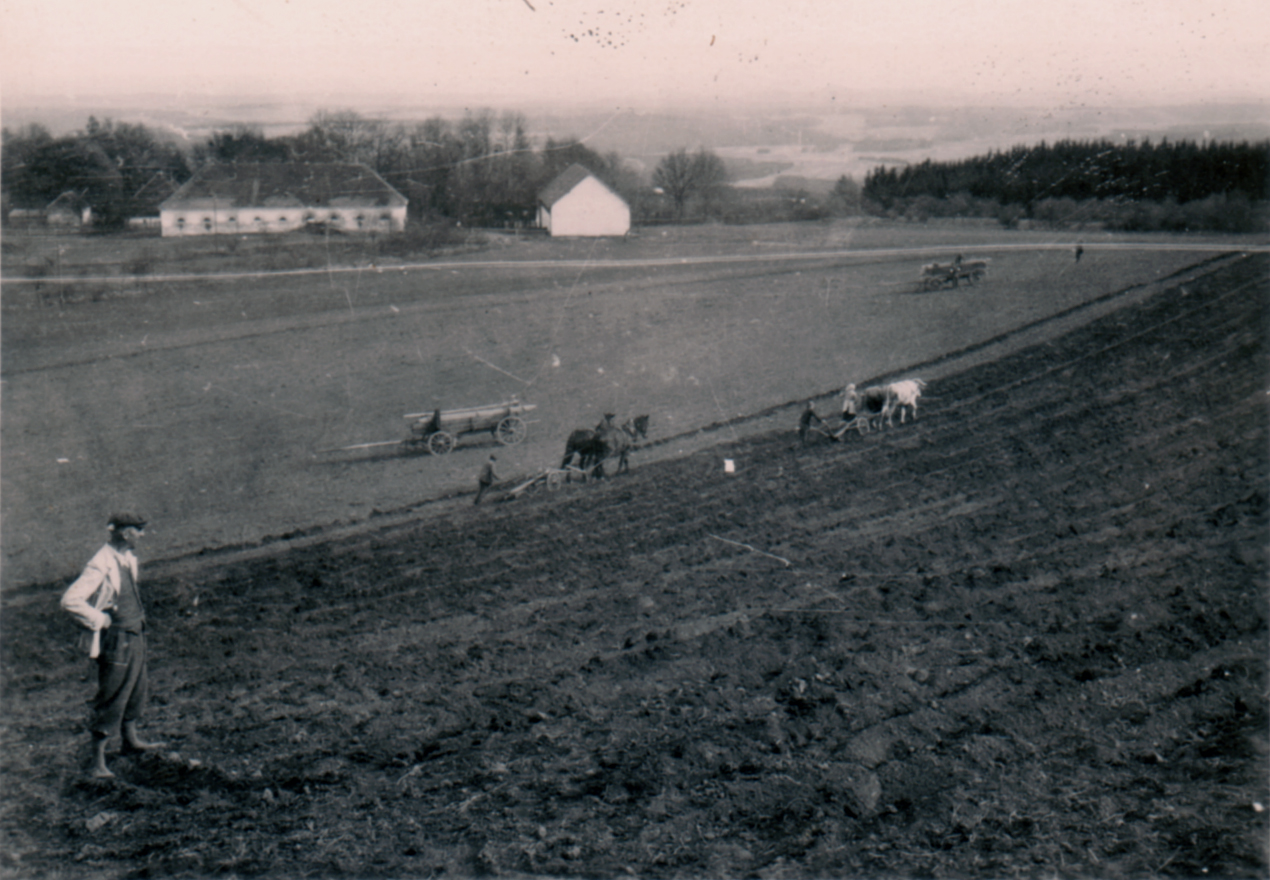
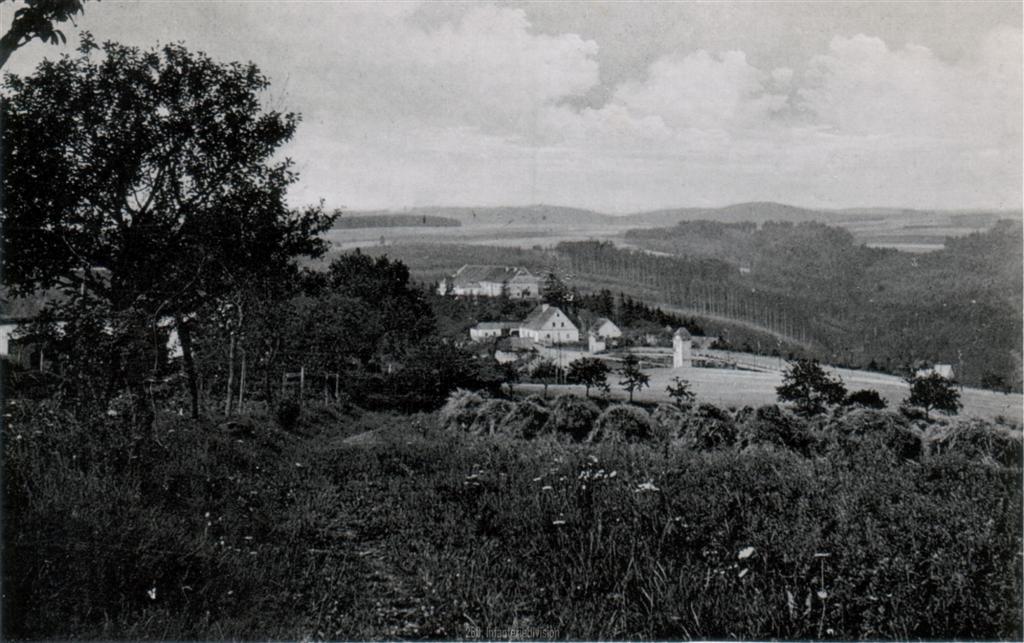
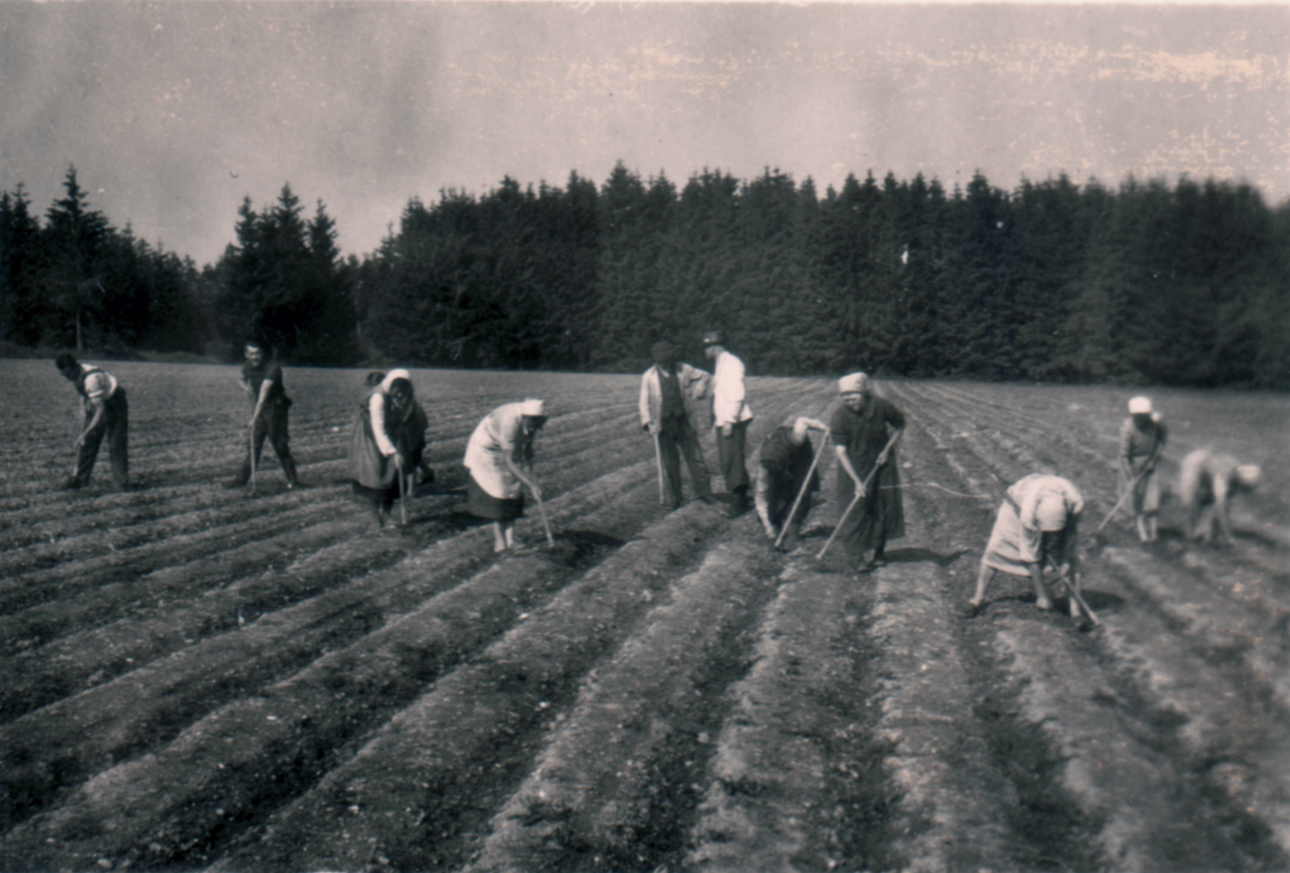
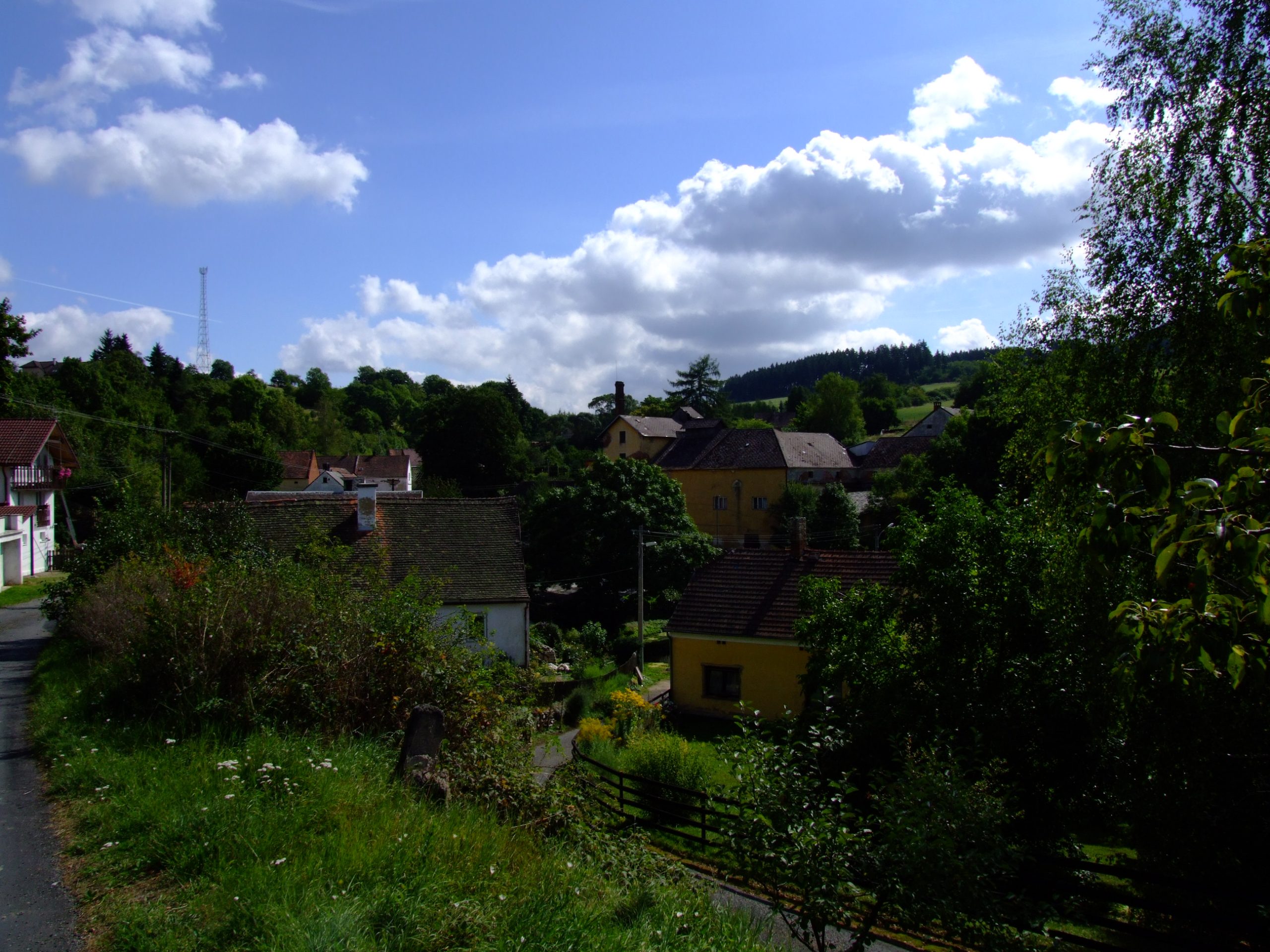
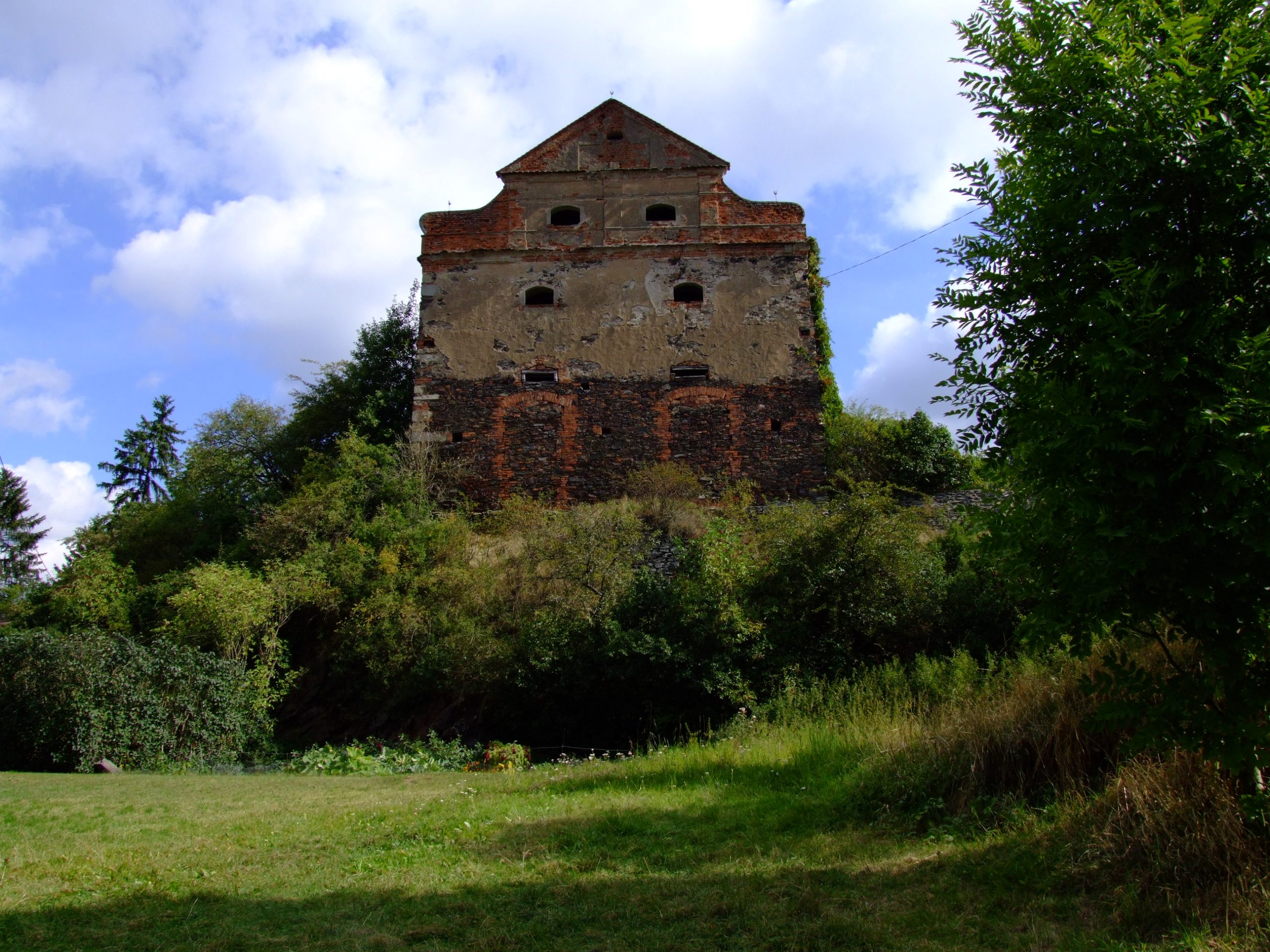
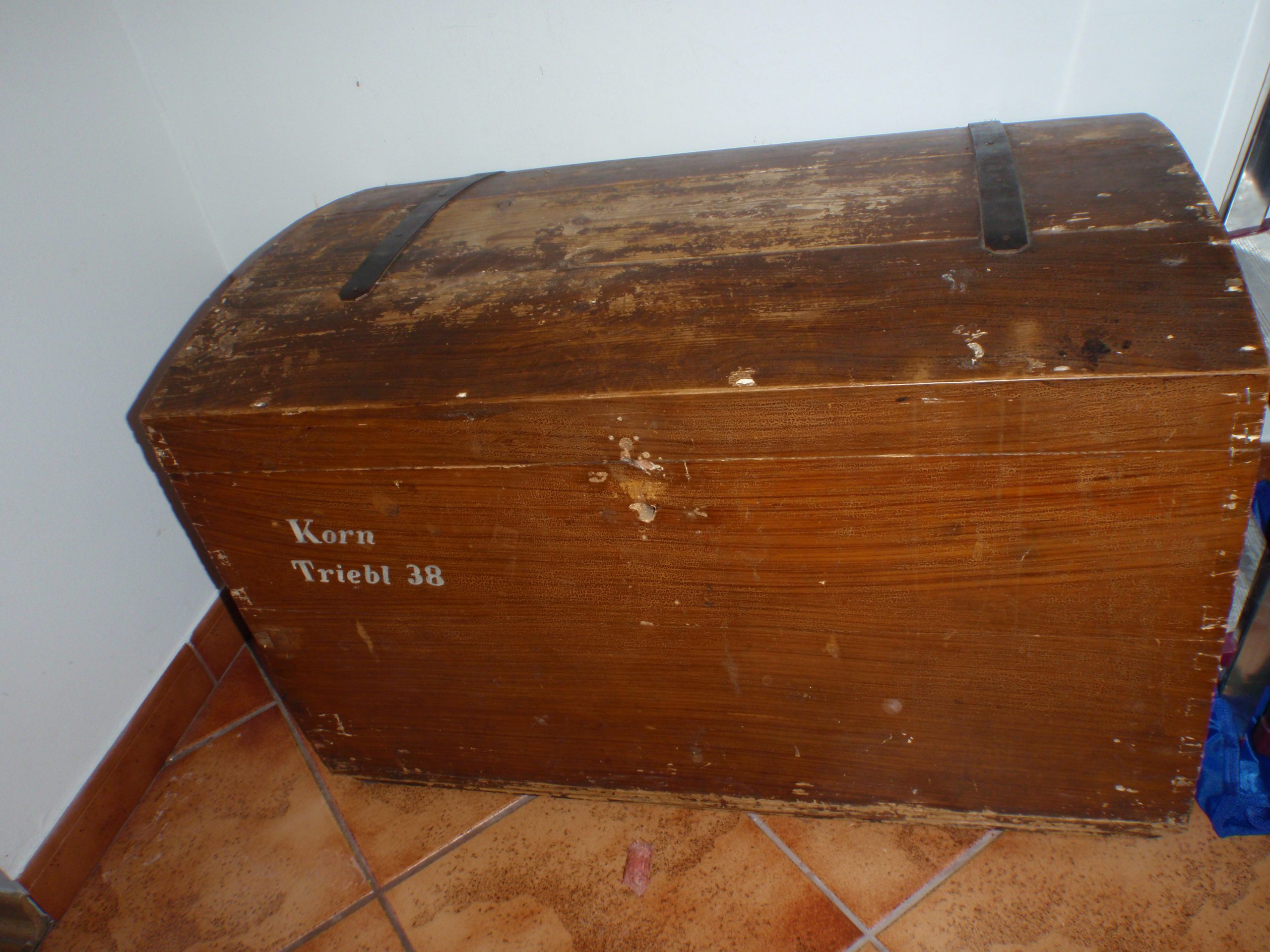
My grandmothers family lived in Triebl – that`s a small village in the Sudetenland. My dad was born here.
Rudolf Baierl, my Grandma Resi’s brother, was a blacksmith and cartwright.
In 1940, he was summoned from the smithy of the estate, or „Meierhof“ as it was called at the time, to become the supervisor of the French, Russian, Polish and Slovak prisoners.
He had been a staunch Nazi since 1939, when the Sudetenland was brought „home to the Reich“.
Nevertheless, he remained humane and treated the foreign workers – as he called them at the time – as such. The supervisor who had held the post before him constantly beat the prisoners of war, sent them to work hungry and made them labour in the summer during the harvest in extreme heat without anything to drink. Anyone who collapsed from exhaustion was punished on top of that. He was transferred to Zinnwald, now a border town with Czechia, where he was killed shortly after the end of the war.
The foreign workers under Rudi’s command were treated decently; the Slovaks were even allowed to distil schnapps, which was also advantageous for the guards. On 10 May 1945, Soviet tanks arrived in Rudi’s village – probably units of the 4th Guards Tank Army; the war was now over.
Rudi returned to work at the smithy. After three weeks, he was picked up and taken to an internment camp where all Nazis were housed in barracks. From there, they were driven by truck to Aussig to clear the rubble. The city centre of Aussig had been completely destroyed by American bombs.
It did not take long before the new administrators of the estate – all of whom were Czech acquaintances of Rudi’s – submitted a request to have him return to the estate as a blacksmith.
This was approved, but the estate had to provide a security guard to watch over him during the day.
In the evening, he was brought back to the camp. On 9 September 1945, Czech acquaintances came to Rudi’s family and said that they had to leave their apartment the next morning to be taken to a collection camp. They would be expelled, they had to pack the bare essentials, they didn’t have much time. And so it came to pass: they were only allowed to pack 50 kilograms, but at least they had been warned the evening before. The next morning at 6 a.m., there was a loud knock on the door and someone shouted: “Nemeciki wen!”, which means “Germans out!” in Czech.
One soldier stood at the door, another ran around the apartment, tearing open all the drawers and cupboards and taking whatever he could use, putting it into a rucksack. Then everyone was driven out of the house and onto a lorry. There were already other Germans on board, and there were kicks and punches until the lorry was full. As they left, they said, “Now you’re going home to the Reich!”
We were driven to the neighbouring village, where we were crammed into barracks and searched again. During this, Rudi’s wife lost her wristwatch. No one knew what had happened to Rudi, and there was great panic about being torn apart. At around 10:00 p.m., there was a commotion in front of the barracks, commands were shouted, then the door was thrown open and Rudi was pushed inside.
At first, everyone was relieved that they might be able to stay together. The next morning, everyone was crammed into trucks again and driven to the freight station, where they were squeezed into cattle cars. There,men, women and children stood for two days without water or food.
Finally, they set off in the direction of Dresden. Once there, they were given tea and food. Everyone received a bag of dried vegetables for the onward journey to northern Germany.
In Brahlsdorf near Hagenow, the Baierl family was taken to a quarantine camp, a former German anti-aircraft camp in the middle of the forest. The children contracted scabies from the straw, which had been used as a bed by many people before them.
On the recommendation of paramedics, the children stood in a pool and rubbed themselves with clayey mud. This killed the scabies mites, but the children caught a bad cold because it was already October and quite cold.
On 1 November, Rudi was transported with his wife and child to Rostock, and slowly things returned to normal. My Grandmother Resi came to Wetzlar with her son Eduard (my dad) and her brothers Franz, who had spinal damage, and Karl.
Other siblings ended up in Roth near Nuremberg and Trier in Rhineland-Palatinate. The family was thus scattered across Germany and rarely saw each other again later on!